

Plastic Pollution in Kenya: A Behavioral Issue or System Failure?
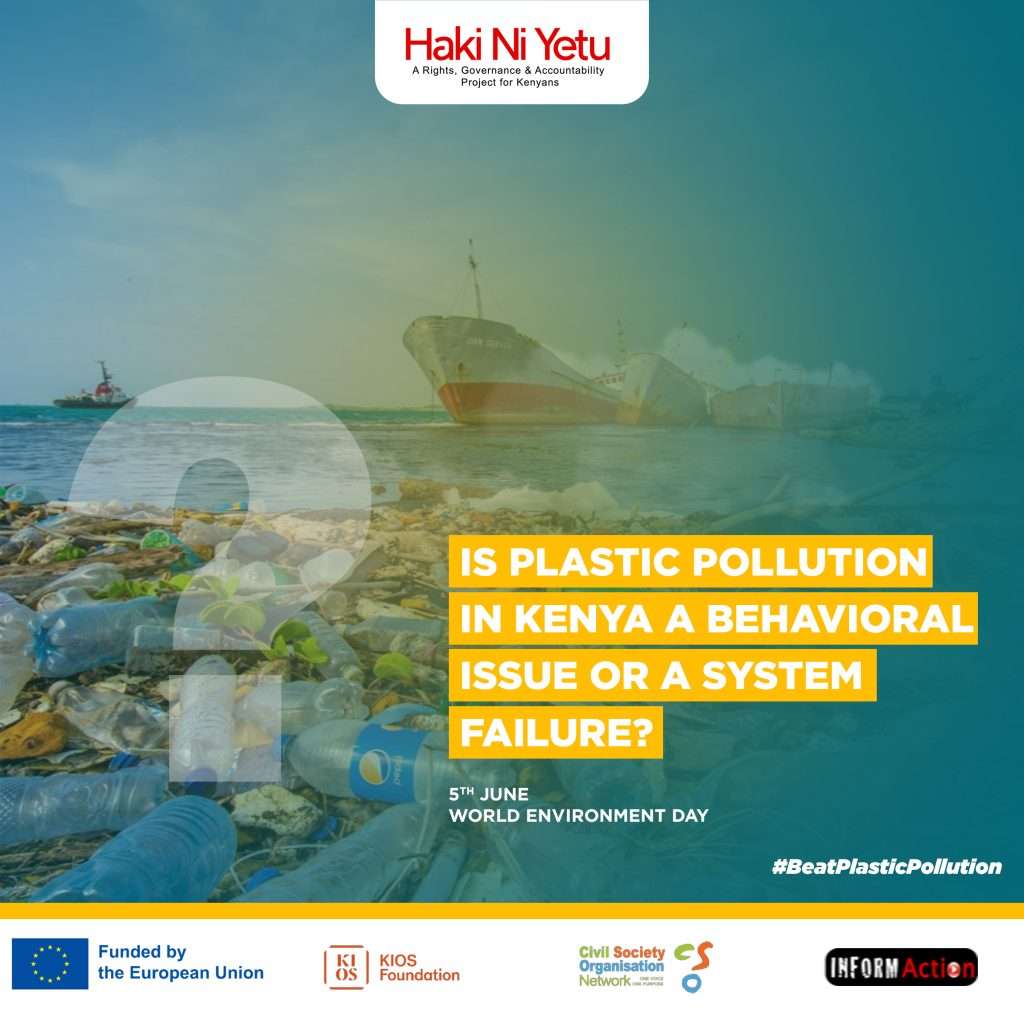
As World Environment Day approaches, Kenya stands at a critical crossroads in its environmental journey. Despite bold moves like the 2017 ban on plastic bags and the 2020 prohibition of single-use plastics in protected areas, the reality on the ground paints a very different picture. Streets, rivers, markets, and even remote villages remain littered with plastics. Lake Victoria, one of East Africa’s most vital water sources, is choking on plastic waste. So, what’s the root cause? Is this crisis driven by individual behavior, or is it a symptom of systemic failure?
Understanding the Crisis
Plastic pollution in Kenya is not just an eyesore — it’s a full-blown environmental, social, and economic crisis. Every year, thousands of tonnes of plastic waste are generated, and a large portion of it is either dumped in open spaces, burned (releasing toxic fumes), or washed into water bodies. The consequences are dire: clogged drainage systems leading to urban flooding, ingestion by livestock and marine life, threats to food safety, and increased disease vectors like mosquitoes breeding in stagnant water.
While public education campaigns have encouraged people to avoid plastic, the persistent presence of plastic pollution suggests a far more complex and layered problem.
The Behavioral Argument: Are We Just Irresponsible Consumers?
There is a common narrative that blames citizens for plastic pollution — people littering, failing to reuse or recycle, or choosing convenience over sustainability. Indeed, behaviors such as using plastic water bottles for single use, discarding packaging carelessly or refusing to sort waste contribute to the growing problem.
But this argument quickly falls apart when one considers why these behaviors exist:
- Limited alternatives: For many Kenyans, sustainable packaging options like cloth bags, glass bottles, or biodegradable containers are either unavailable or unaffordable.
- Lack of infrastructure: Even when citizens are willing to recycle, few places offer reliable waste separation, collection, or recycling services.
- Minimal awareness: Environmental education is not deeply embedded in our national curriculum or community practices, especially in rural and informal urban settlements.
Behavior cannot change in a vacuum. Without supportive systems, blaming the public is both unfair and ineffective.
The Systemic Failure: Broken Policies, Weak Enforcement, and Corporate Greed
Kenya’s plastic pollution crisis is primarily a systemic failure — a result of broken systems, conflicting interests, and weak political will.
- Weak Enforcement of Environmental Laws
While Kenya’s plastic bag ban was globally applauded, enforcement has been inconsistent. Plastic bags are still smuggled in through porous borders, and single-use plastics continue to flood the informal market with impunity. There is little follow-up or accountability for producers, importers, or distributors of banned plastics.
- 2. Lack of a Circular Economy Framework
Kenya has yet to implement a robust national policy on extended producer responsibility (EPR), where manufacturers and importers are held accountable for the life cycle of their products. Without EPR, plastic producers operate unchecked, prioritizing profit over sustainability.
- 3. Poverty and Informality
For millions living in poverty, economic survival comes before environmental consciousness. Informal businesses, which dominate Kenya’s economy, rely heavily on cheap plastic packaging due to its affordability and accessibility. Banning plastics without providing viable, low-cost alternatives disproportionately affects low-income communities and small traders.
- 4. Flood of Unregulated Plastic Imports
Kenya remains a dumping ground for plastic waste and cheap single-use packaging — much of it from multinational corporations and foreign markets. Trade policies, lobbying by big business, and weak border control allow these products to circulate freely, undermining domestic environmental gains.
5. Inadequate Waste Management Infrastructure
Most counties lack proper waste collection, separation, and recycling infrastructure. Urban areas like Nairobi and Kisumu are overwhelmed by uncollected garbage, while rural areas are left to burn or bury their waste. Even well-intentioned citizens have nowhere to take their plastic for responsible disposal.
The Way Forward: Solutions That Address Both Behavior and Systems
If Kenya is to win the war on plastic pollution, we must stop treating it as just a littering problem and start treating it as a structural crisis rooted in policy, economics, and justice. Here are key actions that must guide our next steps:
- Strengthen Enforcement and Accountability
Government agencies like NEMA must be empowered to enforce bans consistently and fairly. Crackdowns on illegal plastic production and imports must go beyond small traders and target the source — manufacturers, importers, and political enablers.
- Support a Just Transition for Informal Economies
Plastic alternatives must be affordable and accessible, especially for small businesses and low-income households. Government and development partners must invest in innovation, subsidies, and training to help traders and communities adapt.
- Embrace Extended Producer Responsibility (EPR)
Producers must take responsibility for their plastic footprint — from production to disposal. Kenya must urgently implement and enforce EPR regulations, requiring companies to fund recycling programs and reclaim plastic waste.
- Build Infrastructure for a Circular Economy
Investments in recycling, composting, and waste-to-energy facilities are critical. County governments must be supported to establish local-level waste management systems, including waste separation at source.
- Raise Awareness and Environmental Literacy
Public education must go beyond slogans. Environmental literacy should be embedded in schools, community outreach, media, and faith-based platforms. Behavior change is possible — but only when people understand the stakes and are given tools to act differently.
Who Benefits, Who Suffers?
Ultimately, we must ask: Who benefits from the current plastic crisis — and who bears the burden? Large corporations continue to profit from selling single-use plastics, while poor communities suffer the health, environmental, and economic consequences.
If we fail to act, Kenya’s dream of a clean and healthy environment — as guaranteed under Article 42 of the Constitution — will remain a dream deferred.
Join the conversation. Raise your voice. Demand accountability.
#SystemFailure #PlasticCrisisKE #HakiNiYetu #BeatPlasticPollutionKE #WorldEnvironmentDay2025